September CPI Preview: Will Inflation Push the Fed Toward Another Rate Hike?
September CPI arrives October 14, followed by PPI. With the Fed already hiking once and Treasury yields above 5%, a hot core inflation print could reshape rate expectations and stock valuations into year-end.

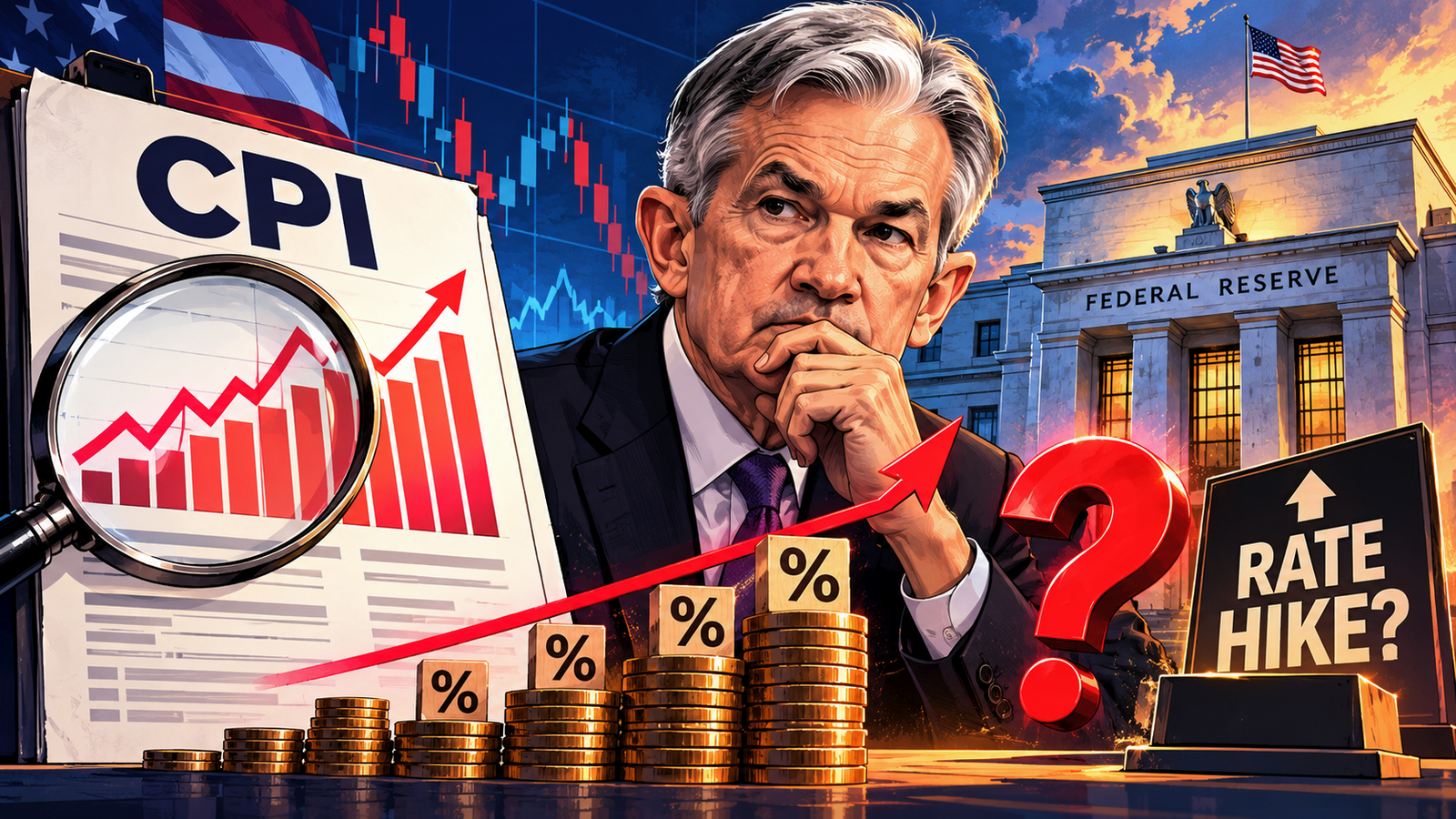
For stock investors, this week’s most important event may not be an earnings report at all. It is the September Consumer Price Index (CPI), due from the US Bureau of Labor Statistics on Wednesday, October 14, at 8:30 a.m. Eastern Time, followed by the Producer Price Index (PPI) on Thursday. These are the last major inflation readings before the Federal Reserve meets on October 27–28, and they could decide whether the central bank raises interest rates again.
How We Got Here
Just a year ago, markets were celebrating Fed rate cuts. The picture has flipped. On September 16, the Fed raised its benchmark federal funds rate by a quarter point to a range of 3.75%–4.00%, its first increase since 2023. The vote was unanimous, and Chair Kevin Warsh signaled that the bank wants clearer proof that underlying inflation is falling toward its 2% goal.
The Fed’s own projections point to more tightening. The median official expects the funds rate to end 2026 around 4.1%, implying one more quarter-point hike before December, and 16 of 18 policymakers see at least one further increase this year.
What Economists Expect From September CPI
| Measure | Forecast | August Reading |
|---|---|---|
| Headline CPI (month-on-month) | +0.5% to +0.6% | +0.4% |
| Headline CPI (year-on-year) | ~3.6% | 3.4% |
| Core CPI (month-on-month) | +0.2% | +0.3% |
| Core CPI (year-on-year) | 2.4% to 2.5% | 2.4% |
Consensus based on economist surveys and the Cleveland Fed inflation nowcast ahead of the release.
The expected pattern is a split. Headline inflation, which includes food and energy, should jump because of $100-plus oil and higher gasoline prices. Core inflation, which strips out those volatile items, is forecast to cool. That distinction matters enormously, because the Fed can partly look through an energy spike but cannot ignore rising core prices.
Three Scenarios for Markets
Hot core (0.3% or higher): This is the scenario markets fear most. It would suggest inflation is spreading beyond energy into services and everyday goods. Odds of an October rate hike would likely rise sharply, Treasury yields would climb, the dollar would strengthen, and high-valuation tech stocks would come under pressure.
In-line core (0.2%): A reading that matches forecasts would likely support a Fed pause in October, though a December hike would remain on the table. Markets could breathe a sigh of relief, especially growth stocks.
Soft core (below 0.2%): A cooler print would ease pressure on bond yields and could revive the rally in technology shares. Rate-sensitive sectors such as real estate and small caps would likely benefit most.
What the Market Is Pricing
Ahead of the release, futures markets put the probability of an October hike at roughly 17% to 22%, well down from about 55% immediately after the September decision. Expectations for a December hike, however, remain high, with some measures putting the odds near 85%. In other words, investors believe the Fed will move again this year; the question is when.
Why Bond Yields Are the Key Link
The 10-year Treasury yield is near 5.27%, the 2-year around 4.79% and the 30-year about 5.64%, according to recent Federal Reserve data. These levels are among the highest in nearly two decades. Higher yields affect stocks in two ways: they raise borrowing costs for companies and consumers, and they make bonds a more attractive alternative to equities. That is why the price-to-earnings multiples investors are willing to pay, especially for growth stocks, are so sensitive to inflation data.
The Expectations Problem
One more warning sign sits beneath the headline numbers. Household inflation expectations have been climbing, with the New York Fed’s consumer survey showing one-year expectations at 3.9% in September. Fed Governor Christopher Waller cautioned on October 8 that persistent inflation risks becoming embedded in public expectations. Once people expect higher prices, they demand higher wages and businesses raise prices more readily, making inflation harder to control.
NXT Media View
This week’s inflation data will shape market direction into year-end. With stocks near record highs and valuations stretched, the margin for disappointment is thin. A tame core reading would likely extend the rally and support the rotation back into technology. A hot one could trigger a broader repricing, hitting growth stocks and pushing yields higher still. Investors should watch core services inflation closely, since that is where the Fed’s concern is concentrated.
Frequently Asked Questions
When is the September 2026 CPI report released?
The US Bureau of Labor Statistics releases the September 2026 CPI on Wednesday, October 14, 2026, at 8:30 a.m. Eastern Time (6:00 p.m. IST). The PPI follows on Thursday, October 15.
What is the difference between CPI and core CPI?
CPI measures the change in prices for a broad basket of consumer goods and services. Core CPI excludes food and energy, which are volatile, giving a clearer picture of underlying inflation trends.
What is PPI and why does it matter?
The Producer Price Index tracks prices businesses receive for their goods and services. Rising producer prices can eventually be passed on to consumers, so PPI often signals where consumer inflation may head.
Will the Fed raise interest rates in October 2026?
Markets currently see a relatively low chance, roughly one in five, of an October hike. A hotter-than-expected core CPI reading could raise those odds significantly. The decision will be announced on October 28.
Why do stocks fall when inflation rises?
Higher inflation can lead to higher interest rates, which increase borrowing costs, reduce the present value of future company profits and make bonds more attractive compared with stocks.
How does US inflation data affect Indian markets?
Higher US inflation and interest rates tend to strengthen the dollar and raise US bond yields, which can lead foreign investors to pull money from emerging markets like India, putting pressure on the rupee and Indian equities.
Disclaimer: This article is for informational purposes only and is not investment advice. Forecasts and market-implied probabilities are based on data available before the CPI release and may change. Readers should consult a qualified financial advisor before making investment decisions.