
Abhishek Sharma Smashes T20I Record With 69 Sixes in 2026: Can Anyone Catch India’s Power-Hitting Star?
Abhishek Sharma has overtaken Suryakumar Yadav's record with 69 sixes in T20 internationals in 2026. We analyse his power-hitting milestone, career numbers and recent performance against West Indies.

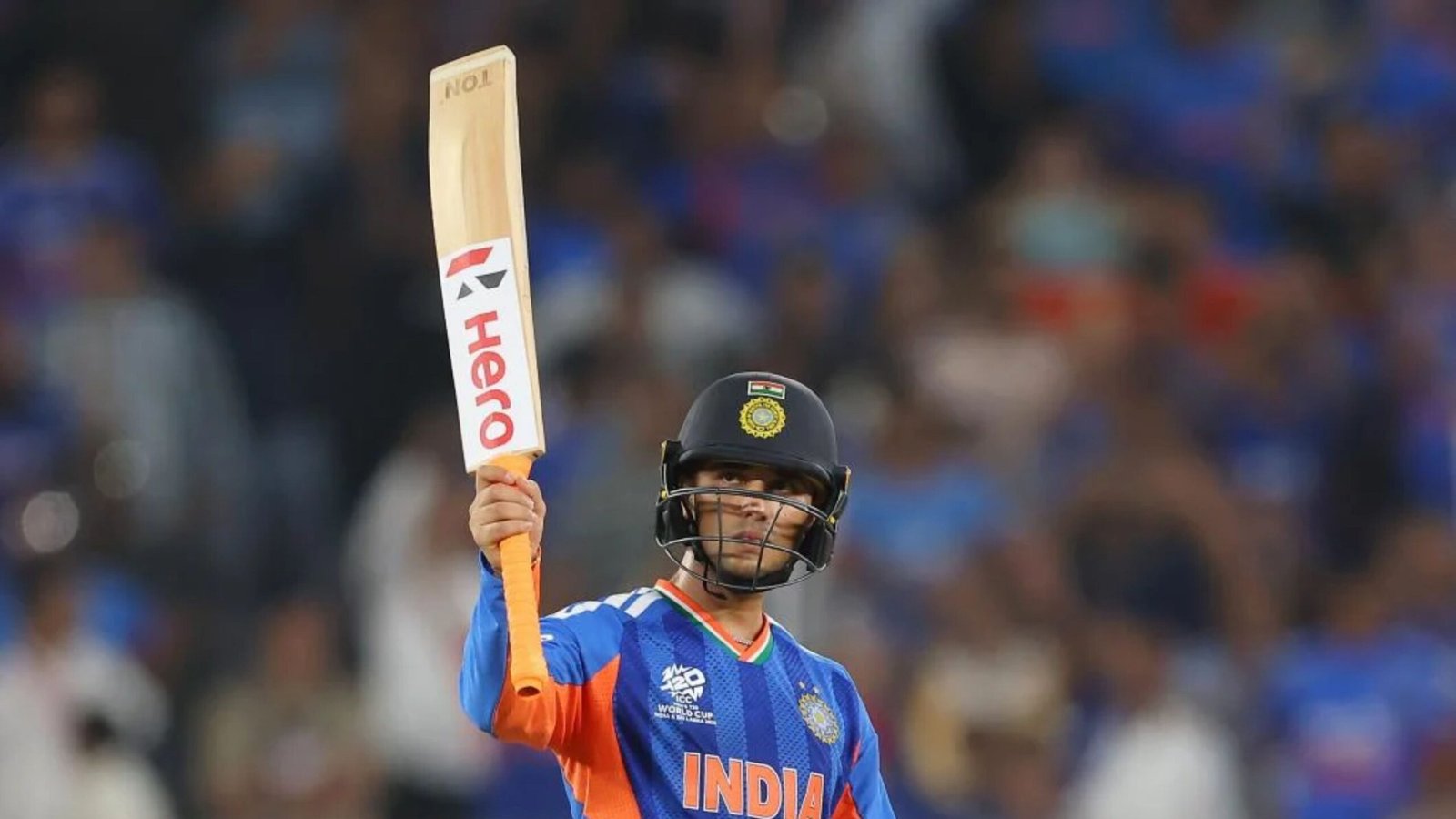
Abhishek Sharma has taken his six-hitting game to another level, becoming the most prolific six-hitter in a calendar year in men’s T20 internationals among Full Member nations. His 69 sixes in 2026 have pushed him past Suryakumar Yadav’s previous benchmark of 68, underlining the extraordinary attacking potential that makes the Indian opener one of the format’s most dangerous batters.
Abhishek Sharma’s rise in international cricket continues to be defined by fearless batting, rapid scoring and an ability to clear the boundary with remarkable frequency. The left-hander has now established a new benchmark for sixes in a calendar year in T20 internationals among teams holding Full Member status, surpassing a record that had stood since 2022.
Yet the achievement tells a bigger story than simply how often the ball travels over the ropes. It reflects a batting approach built around maximising scoring opportunities, putting bowlers under immediate pressure and changing the tempo of an innings within a few deliveries.
There is also an interesting contrast in his recent performances. Abhishek has continued to produce explosive innings during 2026, but his latest outing against West Indies showed that even an aggressive opener can have difficulty converting a start into a match-defining contribution.
For India, the challenge is to make the most of his extraordinary scoring ability while helping him maintain consistency against different bowling plans.
Abhishek Sharma Overtakes Suryakumar Yadav in Six-Hitting Record
Abhishek’s 69th six of 2026 moved him beyond Suryakumar Yadav’s previous record of 68 sixes in T20 internationals during the 2022 calendar year.
The comparison is significant because both players represent different versions of India’s modern T20 batting philosophy. Suryakumar built his reputation through unconventional stroke-making, exceptional placement and the ability to score around the ground. Abhishek, meanwhile, has developed a reputation for attacking bowlers with powerful swings and an aggressive approach from the opening overs.
The record also places Abhishek ahead of his own previous annual tally of 54 sixes, recorded in 2025. That progression suggests his boundary-hitting output has continued to grow as he has taken on a greater role in India’s attacking batting strategy.
Most Sixes in a Calendar Year in T20Is — Full Member Nations
| Player | Year | Sixes |
|---|---|---|
| Abhishek Sharma | 2026 | 69* |
| Suryakumar Yadav | 2022 | 68 |
| Abhishek Sharma | 2025 | 54 |
| Ishan Kishan | 2026 | 52 |
Abhishek’s 2026 tally is ongoing. The comparison is restricted to T20 internationals involving Full Member nations, rather than all domestic and franchise T20 matches.
The narrow margin over Suryakumar’s previous mark makes the achievement particularly notable. More importantly, Abhishek has already exceeded his own previous annual record, leaving him an opportunity to extend the benchmark further before the year ends.
Why Abhishek’s Six-Hitting Ability Matters to India
In modern T20 cricket, a batter’s value is not measured by runs alone. Scoring rate, boundary frequency, dismissal risk and the ability to disrupt bowling plans all influence a player’s impact.
Abhishek’s greatest strength is his capacity to score quickly during the powerplay. When an opener attacks effectively during the first six overs, the opposition is often forced to alter its field settings, change bowling options or introduce defensive lines earlier than planned.
That pressure can create opportunities for the other batter as well. Even when Abhishek is not scoring every delivery, his reputation for attacking can influence how opponents approach the innings.
His six-hitting record is therefore relevant beyond the personal milestone. It illustrates the kind of explosive start India can build around when he is timing the ball well.
However, aggressive batting also carries risk. Bowlers can respond with changes of pace, wider lines, hard lengths and deliveries designed to prevent the batter from accessing his preferred hitting areas. The best power-hitters are those who can adapt when the initial attacking options are taken away.
That adaptability will be important as opposition teams continue to study Abhishek’s strengths.
A Record-Breaking Year Beyond the Boundary Count
Abhishek’s progress in 2026 has not been limited to sixes. He also reached the milestone of 2,000 T20I runs during the third match against West Indies, becoming the sixth Indian batter to cross that mark.
The achievement placed him alongside an elite group featuring Rohit Sharma, Virat Kohli, Suryakumar Yadav, Hardik Pandya and KL Rahul.
Reaching 2,000 T20I runs is a meaningful indicator of sustained contribution. Six-hitting records can be influenced by a short burst of exceptional form, but accumulating thousands of international runs requires repeated opportunities and the ability to produce contributions across different matches and conditions.
Abhishek’s overall T20I numbers underline his attacking approach. According to the supplied career figures, he has scored 2,065 runs in 66 matches at an average of 32.78 and a strike rate of 194.26, with 142 sixes.
Those figures point to a batter who places considerable emphasis on scoring quickly. A strike rate approaching 200 is particularly significant because it means he has scored almost two runs per delivery across his T20I career.
The next stage of his development will involve maintaining that scoring rate while improving his ability to turn promising starts into substantial innings.
Fourth T20I Against West Indies: A Rarely Explosive Innings Falls Short
Abhishek’s latest performance also provides a useful counterpoint to the record.
In the fourth T20I against West Indies in Hyderabad on October 14, he scored 29 runs from 24 balls, including three fours and one six. His strike rate of 120.83 was below the level normally associated with his most destructive performances.
India ultimately lost the match by 24 runs after West Indies posted 247/3 and then bowled India out for 223. The defeat levelled the five-match series at 2-2. <Cite refs={[“turn783765search4″,”turn783765search2”]}/>
The score does not erase Abhishek’s broader achievements, but it highlights an important aspect of T20 batting: a player’s season-long numbers and contribution in a particular match are two different measures.
A batter who normally scores at a high rate can still encounter difficult conditions, disciplined bowling or an innings in which the timing does not come naturally. In those situations, the ability to rotate the strike, identify lower-risk scoring options and accelerate later can become just as important as power.
Against West Indies, Abhishek was unable to produce the sustained acceleration India needed during the chase. That will be an area to examine, particularly as opponents seek ways to limit his scoring without giving him opportunities to attack.
The Numbers Behind Abhishek’s 2026 Form
The supplied statistics paint a picture of a player who has remained highly productive across the year.
Abhishek’s 2026 figures list 950 runs in 33 matches, at an average of 29.69 and a strike rate of 202.13, including one century and eight half-centuries. These figures refer to his broader T20 output and should not be confused with his T20I-only record.
During the four-match T20I series against West Indies, he scored 139 runs at a strike rate of 182.89 and an average of 34.75, according to the supplied figures.
Those numbers show that the fourth T20I was a slower performance within an otherwise productive series. They also demonstrate why a single innings should not be used to judge a batter’s entire campaign.
The more useful question is whether Abhishek can sustain his aggressive approach while making adjustments when bowlers successfully restrict his boundary options.
What Abhishek Must Improve to Become Even More Dangerous
Abhishek already possesses one of the most valuable weapons in T20 cricket: the ability to score sixes at a remarkable rate. The next step is to make that power-hitting more difficult for opponents to contain.
Three areas stand out.
1. Better management of difficult overs
When bowlers use changes of pace or bowl away from the hitting arc, finding singles and twos can prevent an innings from stalling. A high strike rate does not require a boundary on every other delivery.
2. Converting starts into match-winning innings
Abhishek’s attacking style gives him the potential to change a match quickly. Turning more starts into substantial scores would make his contributions more consistent and reduce the pressure on India’s middle order.
3. Adapting to opposition plans
As his reputation grows, teams will increasingly prepare specific strategies to limit his scoring zones. Being able to access different areas of the ground and respond to changing field settings will be essential to his long-term success.
These improvements would not require him to abandon his natural aggression. Instead, they would help him apply that aggression more effectively across different match situations.
Can Abhishek Sharma Extend the Record Further in 2026?
With 69 sixes already recorded in the calendar year, Abhishek has established a new target for future T20I batters among Full Member nations.
The record remains open to extension as the year continues. Every additional six will increase the gap between his tally and Suryakumar’s previous benchmark, making the achievement more difficult for future players to surpass.
Still, records alone do not determine a player’s overall standing. The strongest measure of Abhishek’s development will be how consistently his aggressive batting contributes to Indian victories, particularly in high-pressure matches and major tournaments.
His boundary-hitting ability gives India an important attacking option at the top of the order. If he can combine that power with improved innings management, he could become an even more influential figure in India’s T20I plans.
Verdict: A Record That Reflects Modern T20 Cricket
Abhishek Sharma’s 69 sixes in T20 internationals during 2026 represent more than a statistical milestone. They capture the increasingly aggressive approach that defines modern T20 batting, where the ability to dominate the powerplay can shape an entire innings.
Overtaking Suryakumar Yadav’s previous record is a significant achievement, while crossing 2,000 T20I runs adds another marker of his development at international level.
The latest defeat against West Indies offers a reminder that explosive potential must translate into match impact. His 29 off 24 balls was not the innings India needed, but it should be assessed alongside his wider body of work rather than in isolation.
Abhishek has already demonstrated that he can score quickly, clear the boundary regularly and change the direction of a match in a short period. The next challenge is to turn those qualities into sustained consistency.
The record belongs to Abhishek Sharma. How far he extends it — and how often his power-hitting decides matches for India — will define the next chapter of his T20I journey.