Energy Stocks Lead the Market as Brent Crude Tops $106: What It Means for Exxon and Chevron
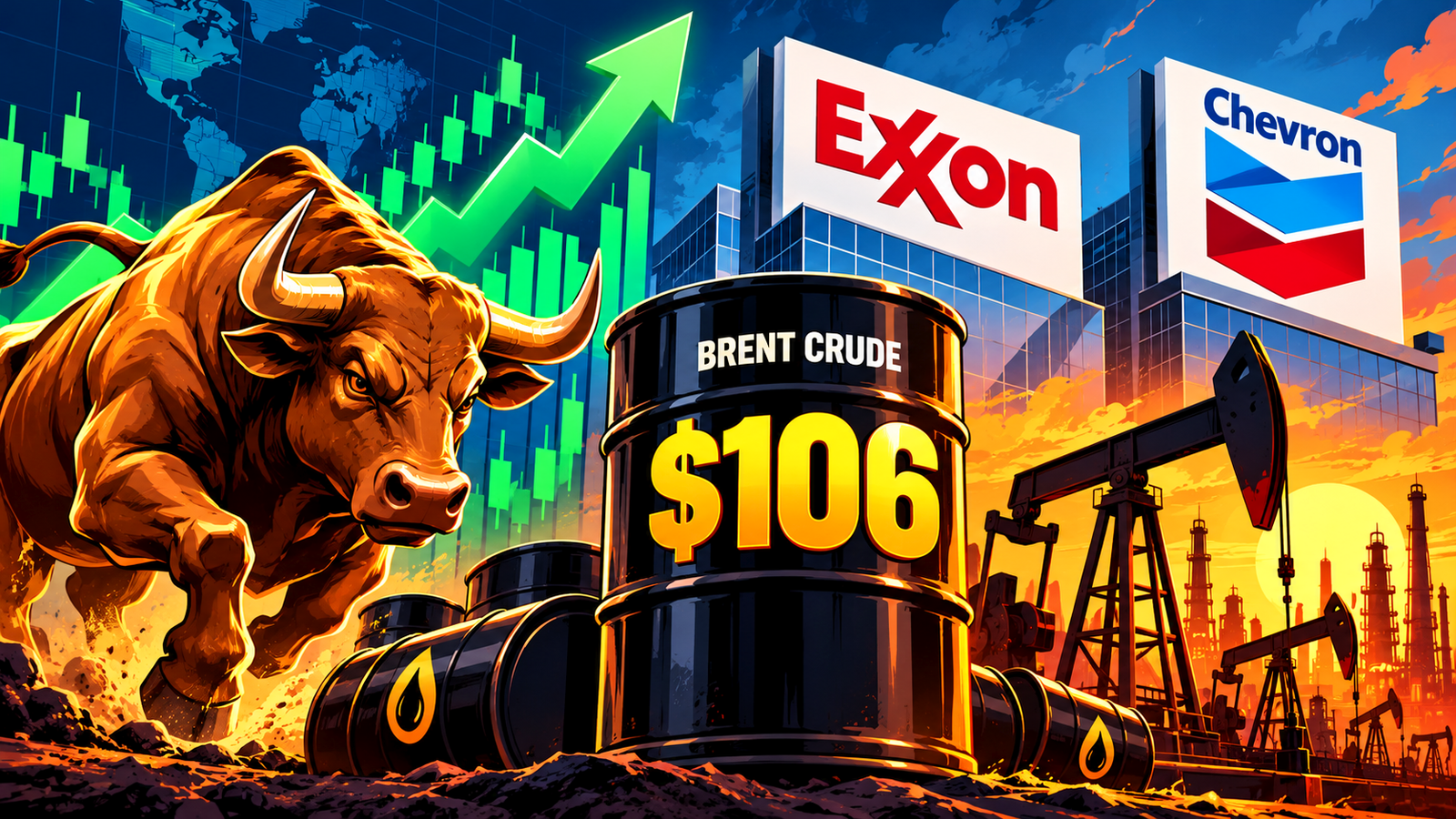
Brent crude settled above $106 after a deadly attack in Riyadh and doubts over a Russia-Ukraine energy truce. Oil majors like ExxonMobil and Chevron are leading the market as tech stocks stumble.

While technology stocks wobble, one corner of the market is quietly doing the heavy lifting. Energy shares are leading the S&P 500 as crude oil holds above $100 a barrel, helping the broader index stay close to record levels even as chipmakers pull back.
On Monday, October 12, Brent crude, the global benchmark, rose about 1.8% to settle at $106.65 a barrel. US West Texas Intermediate (WTI) gained roughly 2% to $93.74. For context, Brent traded near $63 a year ago, meaning oil prices have climbed around 70% in twelve months.
What Is Driving Oil Higher
Escalation in the Middle East
The latest jump followed a major attack over the weekend, when Iran-backed Houthi militants in Yemen struck King Khalid International Airport in Riyadh, Saudi Arabia, killing 12 people and injuring more than 300. It was the deadliest strike on Saudi soil since the Iran conflict began and raised fresh fears for Gulf energy infrastructure and shipping lanes, including the Strait of Hormuz, through which a large share of the world’s seaborne oil passes.
Doubts Over the Russia-Ukraine Energy Truce
Earlier in the session, prices briefly eased after US President Donald Trump announced an “energy ceasefire” between Russia and Ukraine, along with expectations of additional Russian diesel supplies. That optimism faded after Ukrainian President Volodymyr Zelenskyy said Russia was still attacking Ukraine’s energy facilities, and that Kyiv would continue its own strikes on Russian targets.
Tight Fuel Markets
Supply buffers remain thin. Analytics firm Kpler estimates a global diesel shortfall of roughly 1 million barrels per day. In the US, around 1.2 million barrels per day of Gulf of Mexico production was shut in over the weekend because of Hurricane Isaias.
The Counterweight
Not every signal points higher. Middle Eastern crude exports have been recovering, with Saudi shipments more than doubling in September. That recovery is one reason oil has not surged further despite repeated security incidents.
Why Oil Majors Are Benefiting
For integrated giants like ExxonMobil (XOM) and Chevron (CVX), every sustained rise in crude translates into stronger cash flow from their production businesses. At $100-plus Brent, both companies are generating cash well above what they need to fund operations and dividends, which gives them room for larger share buybacks and debt reduction.
Investors also value the energy sector as a hedge. When geopolitical risk rises, oil prices tend to climb, and energy stocks can offset losses elsewhere in a portfolio. That dynamic is visible right now: Monday’s gains in energy helped balance weakness in semiconductors.
Exploration and production companies, which are more directly tied to crude prices than integrated majors, tend to move even more sharply. Sector ETFs such as the Energy Select Sector SPDR Fund (XLE) and the SPDR S&P Oil & Gas Exploration & Production ETF (XOP) offer broader exposure to this trend.
Forecasts Are Moving Up
Some major banks believe elevated prices are here to stay. Standard Chartered recently raised its average 2026 Brent forecast to $92 a barrel from $85.50, and lifted its 2027 forecast to $89.50 from $77.50, arguing that persistent instability in the Middle East and limited spare supply will keep prices high.
The Risks to Watch
Energy’s leadership depends heavily on geopolitics, which can turn quickly. A genuine ceasefire in the Middle East or a durable Russia-Ukraine energy agreement could knock several dollars off crude in days. High prices also create their own problem: expensive fuel feeds inflation, which could push the Federal Reserve toward more rate hikes and slow economic growth, eventually reducing oil demand.
NXT Media View
Energy stocks are playing a defensive role in a market that badly needs one. As long as Brent stays above $100, the cash-flow story for Exxon, Chevron and other producers remains compelling. However, investors buying now are partly betting on continued conflict, which makes the sector vulnerable to sudden diplomatic breakthroughs. Third-quarter earnings from the oil majors in the coming weeks will reveal how much of this price surge is turning into profit and shareholder returns.
Frequently Asked Questions
Why are oil prices so high in October 2026?
Prices are elevated mainly because of conflict in the Middle East, including attacks on Saudi Arabia, along with doubts over a Russia-Ukraine energy ceasefire, tight diesel supplies and hurricane-related production outages in the US Gulf of Mexico.
What is the difference between Brent and WTI crude?
Brent is the international benchmark based on North Sea oil and is used to price most of the world’s traded crude. WTI (West Texas Intermediate) is the main US benchmark, priced at Cushing, Oklahoma.
How do high oil prices help Exxon and Chevron?
Their production costs stay relatively stable while selling prices rise, so higher crude prices boost profit margins and free cash flow, which can fund dividends and share buybacks.
Can energy stocks protect a portfolio during market declines?
Energy stocks often rise when geopolitical risks push oil higher, which can offset losses in other sectors. However, they can fall sharply if oil prices drop, so they are not a guaranteed hedge.
What could make oil prices fall?
A ceasefire in the Middle East, a lasting Russia-Ukraine energy deal, a faster recovery in Gulf exports or a slowdown in global economic growth could all reduce prices.
How do high crude prices affect India?
India imports most of its crude oil, so high prices widen the trade deficit, put pressure on the rupee and can raise fuel and transport costs, adding to inflation. Indian oil marketing companies also face margin pressure when retail fuel prices are not adjusted.
Disclaimer: This article is for informational purposes only and is not investment advice. Prices referenced are settlement levels as of October 12, 2026. Readers should consult a qualified financial advisor before making investment decisions.