Bitcoin Price Today: BTC Holds Near $82,500 as Ledger Wallet Theft Reports and U.S. CPI Keep Traders on Edge
Bitcoin stabilises near $82,500 after a sharp rebound, with $84,000 resistance, reported Ledger wallet thefts and the upcoming U.S. CPI report shaping the cryptocurrency market outlook.


Bitcoin is attempting to stabilise near $82,500 after recovering from a sharp decline, but the cryptocurrency market remains on alert as traders assess liquidation risks, reports of cryptocurrency theft involving Ledger hardware wallets sold through a third-party reseller, and the upcoming U.S. inflation report.
Bitcoin (BTC) briefly climbed above $83,000 during Friday’s U.S. trading session after falling to approximately $80,350 a day earlier. The recovery offered some relief to traders, although the price action suggests that the market has yet to establish a convincing breakout.
With $84,000 emerging as a key resistance level and $81,300 remaining an important downside reference, Bitcoin’s next move could depend on whether buyers return with sufficient strength to absorb selling pressure. The September U.S. Consumer Price Index (CPI), scheduled for release on October 14, is another major event investors are watching.
Bitcoin Recovers From $80,350 as Market Volatility Remains Elevated
Bitcoin’s rebound highlights the market’s continuing struggle between dip buyers and traders looking to reduce risk.
After declining towards $80,350, BTC recovered above $83,000 before consolidating near $82,500. The move indicates that buyers were willing to step in at lower prices, but a short-term rebound alone does not confirm that the broader correction has ended.
Crypto derivatives markets have also experienced significant turbulence. According to the CoinGlass data cited in the original market report, cryptocurrency liquidations exceeded $1 billion over a rolling 24-hour period.
Liquidations occur when exchanges forcibly close leveraged positions after traders fail to maintain the required margin. When prices move sharply against heavily leveraged positions, these forced closures can accelerate market movements, creating a feedback loop of additional buying or selling.
For example, a rapid decline can trigger liquidations of leveraged long positions, adding further selling pressure. Conversely, a sharp rebound can force short sellers to close positions by buying back the assets they sold, potentially intensifying an upward move.
However, liquidation figures must be interpreted carefully. They do not represent the amount of new money entering or leaving the cryptocurrency market, and they do not independently establish whether the next price movement will be bullish or bearish.
For Bitcoin, the important question is whether the latest recovery attracts sustained spot-market buying or simply reflects a temporary unwinding of leveraged positions.
Why $84,000 Is a Critical Level for Bitcoin
Bitcoin’s immediate technical picture revolves around three important price areas: $81,300, $84,000 and $86,500.
According to Bitfinex Alpha’s October 7 market analysis, Bitcoin was facing difficulty reclaiming the $84,000 level, while selling pressure remained concentrated in the broader $85,000–$86,500 region. The research outlined a potential consolidation range between $81,300 and $86,500 ahead of the U.S. CPI release.
Resistance at $84,000: Bitcoin needs to reclaim this level and sustain trading above it to improve the short-term technical outlook. A brief move above resistance would be less convincing without follow-through buying and stronger spot-market participation.
Support near $81,300: This is an important level to watch if selling pressure returns. A sustained breakdown could weaken the current recovery and expose Bitcoin to further downside.
Upper range near $86,500: If BTC breaks above $84,000 and buying momentum continues, the upper end of the projected range becomes the next area traders may monitor. Reaching this zone would not automatically mean that a broader bullish breakout has been confirmed.
Bitfinex Alpha has also highlighted the importance of exchange-traded fund flows, short-term holder profitability and derivatives funding conditions when assessing the sustainability of Bitcoin’s recovery.
These indicators help distinguish a rally supported by genuine demand from one driven primarily by short covering or temporary positioning changes.
For now, Bitcoin remains in a price-discovery battle within a clearly defined short-term range. Neither a decisive bullish breakout nor a confirmed breakdown should be assumed until the relevant levels are tested and the market demonstrates follow-through.
Ledger Investigates Reported Cryptocurrency Theft Linked to Third-Party Reseller
Bitcoin’s price recovery comes as the cryptocurrency industry faces fresh security concerns involving hardware wallet manufacturer Ledger.
Ledger said it was investigating reports of missing cryptocurrency funds involving customers who purchased devices through CryptoBilis, a third-party reseller operating in Southeast Asia. The company asked the reseller to pause sales and shipments while the investigation continued.
Ledger also advised customers who had purchased devices through the reseller within the previous 90 days not to initialise unused devices. Customers who had already configured potentially affected devices were advised to consider moving their assets to a new device using a newly generated recovery phrase.
The incident has attracted considerable attention because hardware wallets are widely used to protect cryptocurrency holdings by keeping private keys away from internet-connected devices.
However, owning a hardware wallet does not eliminate every security risk. The integrity of the physical device, the recovery phrase generation process and the user’s handling of sensitive information all remain important.
A compromised device or exposed recovery phrase can allow an attacker to gain control of funds without needing to break the underlying blockchain network.
Reports published on October 9 and 10 cited independent on-chain estimates of suspected losses exceeding $86 million, with some analyses placing the figure higher. These amounts remain estimates rather than a final loss figure confirmed by Ledger. The investigation is ongoing, and the precise cause and full scope of the reported thefts have not been conclusively established.
Ledger has stated that its own systems and services were not compromised, and the reports have been linked to purchases through the specific reseller rather than establishing a general failure of all Ledger devices.
The distinction matters: reported losses involving a particular distribution channel should not automatically be interpreted as evidence that Bitcoin itself, or every hardware wallet made by the manufacturer, has been compromised.
What Cryptocurrency Investors Should Know
Investors who use hardware wallets should verify the source of their devices, follow official security advisories and never share their recovery phrases with anyone.
Anyone who believes their wallet may be affected should consult the manufacturer’s official guidance and use a trusted, uncompromised device to secure their assets. Recovery phrases should never be entered into unofficial websites, messaging links or applications claiming to provide emergency assistance.
Security incidents can also create opportunities for scammers to exploit public concern. Investors should be particularly cautious of unsolicited messages offering wallet recovery services or requesting private keys.
U.S. CPI Report Could Shape Bitcoin’s Next Direction
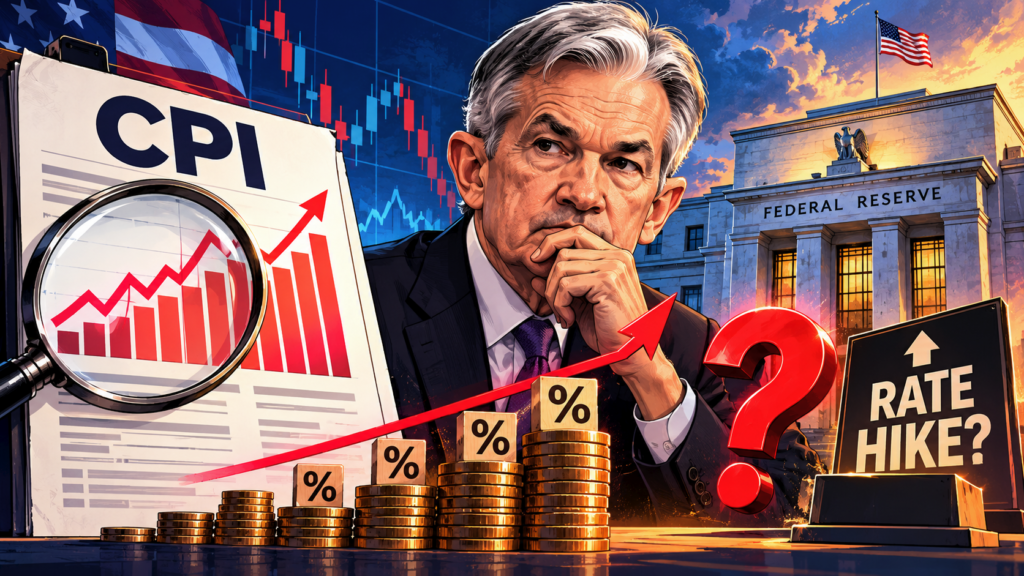
The next major macroeconomic catalyst is the U.S. Consumer Price Index report scheduled for October 14.
The CPI measures changes in consumer prices and is closely monitored by financial markets because inflation influences expectations for Federal Reserve interest-rate decisions.
For Bitcoin, the relationship between inflation and price action is not always straightforward. Traders generally assess the inflation reading against market expectations, Treasury yields, the U.S. dollar and the anticipated path of monetary policy.
A lower-than-expected inflation reading could support risk appetite if investors conclude that price pressures are easing and the Federal Reserve may have greater flexibility to reduce interest rates. Under such conditions, Bitcoin and other risk-sensitive assets could attract additional buying interest.
However, a softer CPI figure would not guarantee a rally. If the result has already been priced into markets, or if other economic data remain strong, the response could be limited.
An unexpectedly high inflation reading could have the opposite effect. If traders anticipate interest rates remaining elevated for longer, Treasury yields and the dollar could strengthen, potentially weighing on speculative assets such as Bitcoin.
The market reaction will depend on the details of the report, including underlying inflation trends, and how the figures compare with consensus forecasts.
Investors will also monitor broader equity-market performance, particularly movements in technology stocks and other growth-oriented assets. Although Bitcoin and equities do not move in lockstep, both can respond to shifts in liquidity, interest-rate expectations and investor appetite for risk.
Bitcoin Price Scenarios Ahead of October 14
Bitfinex Alpha’s projected trading range of $81,300 to $86,500 provides a framework for assessing Bitcoin’s near-term price action. It is a market scenario, not a guarantee of future prices.
Bullish scenario: Bitcoin reclaims $84,000, attracts sustained spot buying and subsequently challenges the $85,000–$86,500 area. A favourable inflation surprise could support this outcome, although confirmation would still depend on price behaviour and market participation.
Range-bound scenario: BTC continues fluctuating between approximately $81,300 and $84,000 as traders reduce leverage and wait for the CPI report. In this situation, temporary price swings may occur without producing a sustained trend.
Bearish scenario: Bitcoin loses the $81,300 reference level on sustained selling pressure. Such a move would weaken the current recovery and increase the risk of further downside, particularly if inflation data push interest-rate expectations higher or broader financial markets turn defensive.
These scenarios are conditional, and the actual outcome may fall outside the projected range if new information significantly changes market positioning.
What Traders Should Watch Next
In the days leading up to the inflation report, traders may focus on five indicators:
- Bitcoin’s reaction around $84,000: Whether BTC can reclaim resistance and hold above it is more informative than a brief intraday spike.
- Spot-market demand: Sustained buying can provide stronger evidence of genuine demand than a rally driven primarily by derivatives liquidations.
- ETF flows: Net inflows or outflows from spot Bitcoin exchange-traded funds can help indicate institutional investment demand, although daily figures can fluctuate.
- Derivatives positioning: Funding rates, open interest and liquidation activity can help identify crowded trades and the potential for sudden price swings.
- U.S. inflation and Treasury yields: The CPI result and subsequent changes in interest-rate expectations could influence Bitcoin alongside stocks, the dollar and other risk assets.
These indicators should be assessed together rather than used in isolation. No single metric reliably predicts Bitcoin’s next move.
Final Outlook: Bitcoin Faces a Crucial Test
Bitcoin’s recovery from approximately $80,350 demonstrates that buyers remain active, but the cryptocurrency has yet to establish a decisive move beyond its immediate resistance zone.
The $84,000 level remains an important hurdle, while $81,300 is a key downside reference identified in Bitfinex Alpha’s analysis. Meanwhile, elevated liquidations, renewed concerns about hardware wallet security and uncertainty surrounding U.S. inflation are keeping traders cautious.
The October 14 CPI report could provide the next major catalyst by changing expectations for Federal Reserve policy and broader financial-market conditions. Until then, Bitcoin may remain sensitive to shifts in liquidity, derivatives positioning and spot-market demand.
For investors, the priority is to separate short-term price fluctuations from a confirmed change in market structure. A sustained move supported by stronger demand would provide a more convincing signal than a temporary rebound, while a breakdown below key support would warrant renewed caution.
Market disclaimer: This article is for informational and educational purposes only. Cryptocurrency and stock-market investments involve substantial risk and can result in significant losses. The price levels and scenarios discussed are not investment recommendations or guaranteed forecasts.